Domain renewal cost increases after year 1 are by design. Learn the pricing model, real renewal costs from reviews, transfer process, and how to save money.
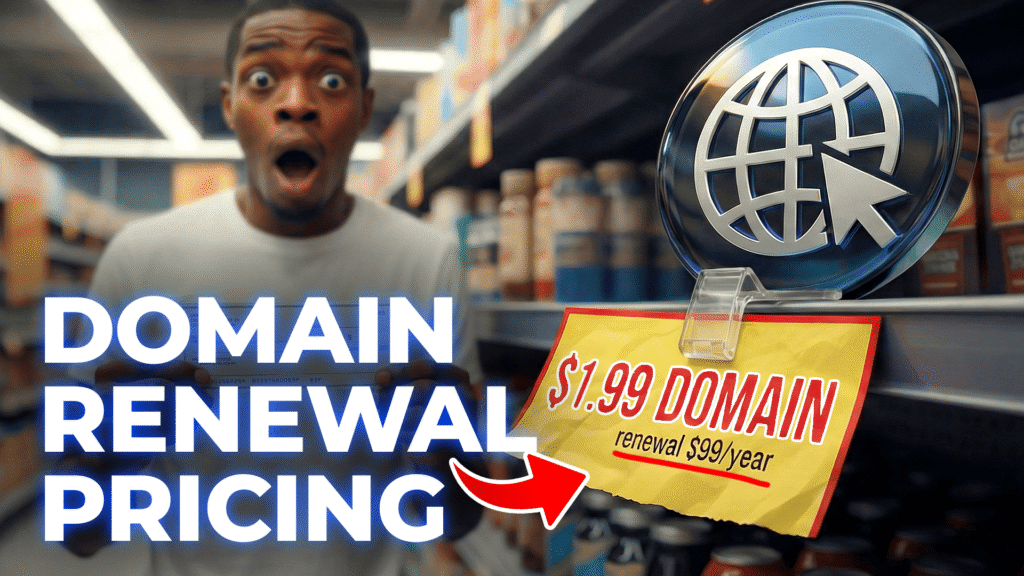
You registered a domain for $9.99. Renewal notice arrives a year later: $17.99. Next year: $19.99. By year five, you’ve paid triple the initial cost and you’re wondering what changed.
Nothing changed – except now you’re locked in.
Domain renewal cost increases are standard industry practice, and understanding domain renewal cost patterns helps you budget accurately for long-term domain ownership. Most registrars offer promotional pricing for the first year, then quietly raise rates at renewal. The business model works because switching domains is painful and most people just pay the bill.
Understanding domain renewal cost structures helps you make informed decisions about where to register domains and whether transferring to a different registrar makes financial sense long-term.
TL;DR
Domain renewal cost is the annual fee charged to maintain ownership of a domain name after the initial registration period expires. When you register a domain, you’re not buying it permanently – you’re leasing it for a specific term (typically one year) with the option to renew.
The renewal price is set by your domain registrar (the company you registered through), not by ICANN or the registry operators. Registrars pay wholesale costs to registry operators like Verisign (.com/.net) or Public Interest Registry (.org), then set their own retail prices including markup for profit and operational costs.
This pricing structure creates an opportunity for what the industry calls “promotional pricing” – offering domains below cost or at minimal margin for the first year, then recovering profit through higher renewal fees once customers are invested in the domain.
A single domain seems cheap. But most website owners accumulate multiple domains over time – brand variations, geographic extensions, defensive registrations, and old project domains that might be useful someday. Ten domains at $20/year renewal means $200 annual commitment. Twenty domains doubles that. The costs compound.
Renewal pricing impacts your long-term budget more than initial registration pricing. You might pay $9.99 once, but you’ll pay the renewal rate every year for as long as you keep the domain. Over ten years, the difference between $13/year and $20/year renewal is $70 per domain. Multiply across a portfolio and renewal pricing becomes the dominant cost factor.
Domain registrars heavily discount first-year registrations to acquire customers. A .com domain costs registrars approximately $9 at wholesale from Verisign (the .com registry operator). Registrars offering $9.99 first-year pricing make essentially zero margin. Some offer domains at $2-5 for the first year – operating at a loss to build market share.
The business model only works if renewal pricing recovers those acquisition costs plus generates profit. This creates the fundamental disconnect: customers see $9.99 and assume that’s the domain’s “real price,” but registrars view that as a customer acquisition cost they’ll amortize through renewals.
User reviews reveal the actual renewal pricing many customers encounter:
A Warrior Forum user reported their GoDaddy renewal costs:
The same user noted: “This is a 66% price increase over last year. Where in the heck do they get off zapping their customers with such a huge jump.”
Another Warrior Forum discussion highlighted a .ws domain renewal priced at $39 with GoDaddy, which transferred to NameCheap for $24 – a $15 saving on a single renewal.
Trustpilot reviews consistently cite renewal pricing as a pain point: “GoDaddy lures customers in with prices that look low. However, they often promote prices that only apply for the first year, then lock you in for more expensive renewal prices.”
These aren’t outliers – they’re the standard industry practice. The disconnect between promotional and renewal pricing exists across most major registrars.
The domain industry has normalized promotional pricing followed by renewal increases because customer switching costs are high enough to make the strategy profitable.
Moving a domain to a new registrar requires:
Technical steps: Unlock the domain in your current registrar’s control panel, request the EPP/authorization code, initiate transfer at the new registrar, approve the transfer via email, update nameservers if needed, and wait for the 60-day transfer lock to expire.
Psychological barriers: The domain feels like yours. You’ve built a website on it, pointed email to it, and shared it with customers. Changing registrars feels riskier than paying the renewal fee.
Time investment: Transfers take 5-7 days to complete. DNS changes can cause temporary access issues if mishandled. Most people would rather pay $10-20 extra than risk their website going offline.
Registrars bundle domain registration with email hosting, DNS management, domain privacy, SSL certificates, and website builders. Transferring the domain means migrating or recreating these services at the new registrar. Each additional service increases switching friction.
Some registrars charge separate fees for services that should be free. Domain privacy (WHOIS protection) often costs $9.99/year extra. Premium DNS is another $5-10/year. These fees compound the renewal cost but make switching feel more expensive because you’d need to rebuild the service stack elsewhere.
The switching friction model works best on customers with multiple domains. A user with 50 domains faces a choice: spend hours transferring them all to save $10/domain ($500 total), or just pay the renewal fees and avoid the hassle. Most choose the latter.
One Warrior Forum user described accumulating 200+ domains over years: “You suddenly find that you have a $2,000 to $3,000 or more business liability rolling around every year that you have to fund.”
At that scale, renewal pricing becomes a significant operational cost. But the effort required to audit pricing across 200 domains, find better registrars, and execute 200 transfers is substantial enough that many users just accept the renewal fees.
Most registrars don’t prominently display renewal pricing during the checkout process. You see the promotional price in large text. The renewal price appears in smaller text, in the terms, or not at all until you receive the renewal notice.
In your registrar’s help documentation: GoDaddy publishes renewal pricing at godaddy.com/help/renew-pricing. Namecheap has a similar page. Check “[registrar name] renewal pricing” to find the official documentation.
In your account settings: Most registrars let you view renewal pricing for your specific domains in the domain management section. Look for a “Renewals” or “Pricing” column or a domain details page that shows the next renewal date and cost.
Before you register: Honest registrars show both registration and renewal pricing on the domain search results page. If you only see the registration price, that’s a red flag.
Through price comparison sites: Independent hosting review sites often maintain renewal price comparison tables. These aren’t always current but provide a ballpark sense of what different registrars charge.
Registrars enable auto-renewal by default. This ensures they capture renewals at list price without giving you a chance to find discount codes or shop around. You receive a renewal notice, but by the time you see it, the charge has already processed.
Disabling auto-renewal lets you manually review renewal pricing before committing. You can search for discount codes, compare alternative registrars, or decide whether to let the domain expire. The downside is you must manually track renewal dates – let a domain lapse and you risk losing it or paying recovery fees.
Some users set calendar reminders 45 days before renewal. This provides time to evaluate options, transfer if needed, and find discount codes before the deadline.
If your current registrar’s renewal pricing is significantly higher than alternatives, transferring the domain can save money long-term. Domain transfers reset some pricing elements and give you a fresh start with a new registrar.
The transfer process moves your domain registration from one ICANN-accredited registrar to another. The domain name itself doesn’t change – it stays registered to you. What changes is which company manages the registration and bills you for renewals.
Step 1: Unlock the domain at your current registrar
Log into your registrar’s control panel, navigate to domain management, select the domain, and look for “Registrar Lock” or “Domain Lock” settings. Disable the lock. This setting prevents unauthorized transfers but must be disabled before you can initiate a legitimate transfer.
Step 2: Request the EPP/authorization code
Also called an “auth code” or “transfer code,” this is a password that proves you own the domain. Your current registrar provides this code through the domain management interface. Some registrars email it immediately; others require support ticket requests.
Step 3: Initiate the transfer at the new registrar
Visit the new registrar (such as WebHostMost), navigate to domain transfer, enter your domain name, and provide the EPP code when prompted. The transfer fee typically equals one year of registration at the new registrar’s rate and extends your domain by one additional year beyond the current expiration date.
Step 4: Approve the transfer
Both your old and new registrars send confirmation emails to the domain’s administrative contact (the email in WHOIS). You must approve the transfer through the link in the email. The old registrar may offer to cancel the transfer – decline this unless you’ve changed your mind.
Step 5: Wait for transfer completion
Transfers take 5-7 days to fully complete due to ICANN’s mandatory waiting period. During this time, the domain remains functional. DNS settings, nameservers, and website content stay accessible. Nothing breaks during an in-progress transfer.
Step 6: Update nameservers if needed
After the transfer completes, verify your nameservers are correct at the new registrar. If you’re hosting with WebHostMost, update nameservers to:
DNS changes take 24-48 hours to propagate globally, though most users see updates within a few hours.
ICANN enforces a 60-day transfer lock after any transfer completes. You cannot transfer the domain again during this period. This prevents domain hijacking through repeated rapid transfers.
Domains registered within the last 60 days cannot be transferred. New registrations must wait 60 days before you can move them to a different registrar.
Expired domains cannot transfer. If your domain expires at the old registrar, you must renew it there before initiating a transfer.
Most registrars charge one year’s registration fee for incoming transfers. This fee is not additional – it extends your domain’s expiration date by one year. If your domain currently expires December 2026 and you transfer in February 2026, after the transfer it expires December 2027.
Some registrars offer discounted transfer pricing as a promotion. These function like first-year registration discounts – attractive transfer price, then standard renewal pricing in subsequent years.
Not all domain extensions cost the same. Registry operators (the companies that control each TLD) set different wholesale prices, which registrars pass through to customers plus markup.
.com domains: Most registrars charge $12-20/year for .com renewals. Wholesale cost from Verisign is approximately $9.59. The $2.40-10.40 difference is registrar markup.
.net domains: Similar pricing to .com since Verisign operates both registries. Expect $12-18/year renewals.
.org domains: Operated by Public Interest Registry. Renewal pricing typically ranges $12-16/year.
.io domains: One of the most expensive TLDs due to registry-level pricing. Renewals often hit $40-60/year at major registrars. The .io registry charges high wholesale rates.
.ai domains: Similar to .io – premium registry pricing leads to $60-100/year renewals depending on the registrar.
.dev, .app, .page: Google operates these TLDs. Renewal pricing typically $12-18/year, similar to .com.
.xyz, .online, .site: Budget-friendly alternative TLDs often offered at $1-5 promotional pricing but renewing at $8-15/year. Check renewal pricing carefully as the gap between promo and renewal is wider than .com.
Country code TLDs (.uk, .de, .ca, etc.) have renewal pricing set by local registries. Prices vary significantly:
.uk domains: Often cheaper than .com, renewing around $8-12/year.
.de domains: Germany’s TLD is competitively priced at $10-15/year.
.ca domains: Canada’s TLD typically costs $15-20/year to renew.
.us domains: United States TLD renewal pricing varies widely ($10-25/year) and some registrars add restrictions on who can register.
Registries designate certain short or keyword-heavy domains as “premium” with higher registry-level pricing. A premium .com might cost $500-5,000/year to register and renew, set by Verisign’s premium pricing model. These aren’t registrar markups – the registry itself charges these rates.
When evaluating domain registrars, renewal pricing is just one factor. Other elements impact total cost of ownership and long-term satisfaction.
The best registrars show both registration and renewal pricing clearly on the domain search results. No fine print. No surprises. If a registrar heavily advertises promotional pricing but buries renewal rates in help documentation, that’s a signal about their business model priorities.
Some registrars include domain privacy (WHOIS protection) at no extra cost. Others charge $9.99/year per domain. Over ten domains, this is a $100/year difference. DNS management should be free. Premium DNS with extra features might be worth paying for, but basic DNS should never cost extra.
Check whether the registrar makes transfers difficult. Some registrars require phone calls or support tickets to unlock domains or receive EPP codes. Others provide instant access through the control panel. The easier transfers are, the less locked in you are.
Registrars send renewal notices anywhere from 60 days to 7 days before expiration. More notice gives you time to evaluate options. Last-minute notices create urgency that encourages auto-renewal at list price.
ICANN allows a grace period after domain expiration during which you can still renew at normal rates. After the grace period, domains enter “redemption” status with recovery fees of $80-150. Check your registrar’s grace period length and redemption fees – they vary significantly.
Most registrars let you register or renew domains for up to 10 years at once. Multi-year registration can protect against future price increases by locking in current rates.
Domains you’re certain to keep: If you own your business name or primary brand domain, you’ll renew it regardless of price. Locking in multiple years at today’s rate protects against future increases.
Registry-level price hikes: In 2020, Verisign (the .com registry) gained permission to increase .com wholesale pricing by up to 7% annually. Multi-year registrations made before increases locked in lower rates.
Discount codes that apply to all years: Some registrars offer promotional codes that discount multi-year purchases. If you can register 5 years at $10/year when the normal rate is $15/year, you save $25 total.
Uncertain project domains: If you’re registering a domain for a project that might not pan out, paying for 5-10 years upfront wastes money if you let it lapse after year two.
Registrar-level pricing: Multi-year registration locks in the registrar’s current rate but doesn’t protect against the registrar raising rates on subsequent renewals. If you register for 5 years at $12/year, year six might still jump to $20/year.
Opportunity cost: Money spent on multi-year registration could be used elsewhere. If renewal pricing drops or better registrars emerge, you’re locked into your current registrar until the multi-year term expires.
At WebHostMost, we’ve applied price transparency to hosting through our Price Freeze guarantee: the rate you pay at signup is the rate you pay at renewal. No surprise invoices. No bait-and-switch pricing.
This principle applies to hosting plans, not domain registrations. Domain prices are set partly by registry-level fees that we don’t control. But our hosting model demonstrates how we think about customer relationships – transparency over tricks.
If you’re frustrated by hosting renewal pricing games, check our hosting plans. Your Year 1 hosting price is your Year 10 hosting price. We don’t use the promotional-pricing-then-increase model that’s standard in the hosting industry.
For domains, we offer straightforward registration and transfer services:
Register a new domain – Clear pricing, no hidden renewal fees.
Transfer an existing domain – Includes 1-year extension, simple process.
After transferring a domain to WebHostMost, update your nameservers to our infrastructure:
We can’t control registry-level domain pricing (Verisign sets .com costs, not us), but we can control how hosting renewals work. And we’ve chosen transparency.
Proactive domain management prevents renewal shock and helps you budget accurately for long-term domain costs.
Add calendar entries 45 days before each domain expires. This provides time to review renewal pricing, search for discount codes, evaluate whether you still need the domain, and initiate transfers if you’ve found a better registrar.
Manual tracking works for 1-5 domains. Beyond that, spreadsheet tracking or domain monitoring tools become necessary.
Once a year, audit all domains. Ask whether each domain still serves a purpose. Unused domains are dead weight costing $15-20/year each. Letting them expire frees budget for domains that matter.
Consolidate where possible. If you registered defensive variations (.net, .org, .io of the same name) but only use .com, consider whether the others are worth renewing.
Renewal pricing changes over time. A registrar competitive in 2020 might be expensive in 2026. Once a year, spot-check renewal rates at alternative registrars. If you can save $5/domain across 20 domains, that’s $100/year worth transferring.
Many registrars issue renewal discount codes to encourage early renewals before you shop around. Sign up for your registrar’s promotional emails or bookmark coupon sites that track registrar codes. Renewals at 20-30% off list price significantly reduce annual domain costs.
If renewal cost is a major concern and you’re registering new domains, evaluate whether you need .com specifically. A .io domain renewing at $60/year might not be worth it if a .com alternative exists at $15/year. Balance branding value against cost.
Domain renewal cost is higher than registration cost by design, not accident. Registrars use promotional pricing to acquire customers, then rely on switching friction to retain them at higher renewal rates. This model works because moving domains is inconvenient enough that most people pay the increase rather than transfer.
The solution isn’t finding a single “best” registrar. The solution is understanding renewal pricing before you register, evaluating whether that pricing makes sense for your budget, and being willing to transfer domains when renewal costs at your current registrar exceed better alternatives.
Check your domain renewal costs today. Compare them against current market rates. If you’re overpaying significantly, transferring takes a few hours and saves money every year for as long as you keep the domain.
For hosting, the renewal pricing game doesn’t apply at WebHostMost. Our Price Freeze guarantee means your signup price is your renewal price, indefinitely. Browse our hosting plans to see transparent pricing applied to hosting.
For domains, we offer fair registration and transfer rates. Register a domain or transfer from your current registrar and experience domain management without surprise renewals.
More articles about hosting, domains, and web infrastructure: WebHostMost Blog
Domain renewal cost shouldn’t be a mystery. Budget accurately, transfer when it makes sense, and stop paying more than necessary for domains you own.
